

 YouTube
 Spotify
 Apple Podcasts
 Amazon Music
 iHeartRadio
 Castbox
 Overcast
 RadioPublic
 What Is Branding? Branding vs Marketing & What Most Companies Get Wrong | David Brier
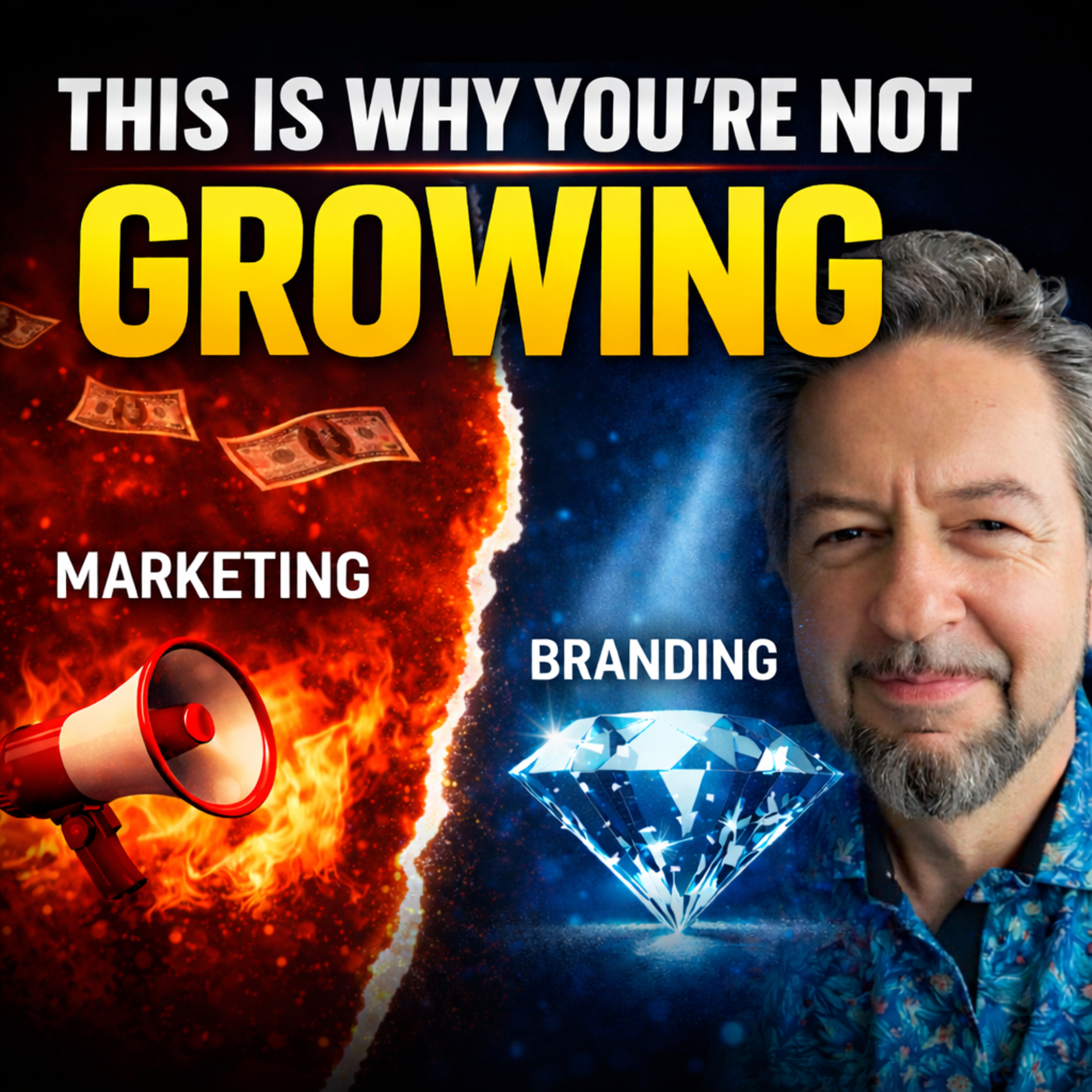
In this episode of An Hour of Innovation podcast, Vit Lyoshin sits down with branding expert David Brier to unpack one of the most misunderstood concepts in business: the real difference between branding and marketing.
With over 45 years of experience, David defines branding in four powerful words: the art of differentiation. While marketing focuses on promotion and distribution, branding is about owning a distinct position in the mind of the customer. Without clear differentiation, companies are forced into price wars or feature comparisons that ultimately erode value.
The conversation explores why great products often fail without strong brand positioning, how founders fall in love with their own ideas, and why conviction matters more than incremental improvement. David shares stories of companies that achieved massive growth, not by spending more on advertising, but by reframing their brand narrative.
They also dive into storytelling as a strategic tool, the risks of “AI slop” in modern branding, and what the future of branding may look like in an increasingly automated world. David argues that as AI makes average content easier to produce, the brands that win will be the most human, intentional, and bold.
One of the most practical takeaways is the idea of three phases of branding: before the sale, during the sale, and after the sale. It’s the often-overlooked post-sale experience, the moments of surprise and delight, that create loyalty and long-term growth.
This episode is a sharp, practical exploration of brand strategy, differentiation, storytelling, and customer loyalty, and a reminder that in a noisy market, you cannot sneak up on greatness.
David Brier is a globally respected branding expert, author of Brand Intervention, and advisor to startups, scaleups, and global companies alike. He’s known for his sharp thinking on brand differentiation, premium positioning, and helping organizations add massive revenue through branding alone, sometimes without spending an extra dollar on marketing. His insights cut through noise, hype, and AI buzz to reveal what actually makes brands unforgettable and profitable.
Takeaways
- Branding defines differentiation, marketing amplifies it.
- Companies often compete in the wrong race: either the cheapest or the most features.
- A strong brand can increase revenue dramatically without increasing marketing spend.
- You can’t sneak up on greatness; bold positioning beats small, cautious moves.
- Falling in love with your product blinds you to how the market actually sees it.
- If customers can’t instantly see your unique value, they default to comparing prices.
- Selling “solutions” is weaker than helping customers manage a meaningful problem.
- Great branding reframes conversations so customers reach new conclusions.
- AI is a tool, not a substitute for originality; overuse leads to “AI slop.”
- Most companies ignore post-sale branding, missing the biggest loyalty opportunity.
- Surprise and delight after the sale create retention more effectively than promises before it.
Timestamps
01:48 What Is Branding? The Art of Differentiation
06:29 Branding vs Marketing: What’s the Real Difference?
08:28 Why Branding Matters in a Competitive Market
14:40 Good vs Bad Branding: What Makes Brands Win
17:45 Top Branding Mistakes Founders Must Avoid
23:10 How Much Should You Invest in Branding?
27:23 Brand Storytelling: Why Stories Build Loyalty
31:11 AI in Branding: Tool or Threat?
36:25 Biggest Branding Mistakes That Hurt Growth
40:14 The Future of Branding
43:35 How to Build a Strong Brand From Scratch
47:31 Post-Sale Branding: The Secret to Retention
52:41 Innovation Q&A
Connect with David
- Website: https://davidbrier.com/
- LinkedIn: https://www.linkedin.com/in/davidbrier/
- X: https://x.com/davidbrier
- Book: https://www.risingabovethenoise.com/brand-intervention-transform-brand-movement/
This Episode Is Supported By
- Google Workspace: Collaborative way of working in the cloud, from anywhere, on any device - https://referworkspace.app.goo.gl/A7wH
- Webflow: Create custom, responsive websites without coding - https://try.webflow.com/0lse98neclhe
- MeetGeek: Record, transcribe, summarize, and share insights from every meeting - https://get.meetgeek.ai/yjteozr4m6ln
For inquiries about sponsoring An Hour of Innovation, email iris@anhourofinnovation.com
Connect with Vit
- LinkedIn: https://www.linkedin.com/in/vit-lyoshin/
- Substack: https://anhourofinnovation.substack.com/
- X: https://x.com/vitlyoshin
- Website: https://vitlyoshin.com/contact/
Episode References
Amazon
https://www.amazon.com
Referenced as the platform where over 25,000 books on branding can be found, illustrating the lack of a unified branding definition.
Dianetics (Book by L. Ron Hubbard)
https://www.amazon.com/Dianetics-Modern-Science-Mental-Health/dp/140314446X
Mentioned as a book David read early in his career to better understand human behavior and psychology.
Apple
https://www.apple.com
Used as an example of premium branding and customer experience, including Apple Store buying behavior and AppleCare human support.
Steve Jobs (speech)
https://www.youtube.com/watch?v=b4n8uT12ij8
Referenced for his product launch presentations that exemplified the alignment of branding and marketing.
Dyson
https://www.dyson.com
Cited as a disruptive example of brand differentiation in the vacuum cleaner industry through design and innovation.
Liquid Death
https://liquiddeath.com
Used as an example of bold differentiation and unconventional branding in a commoditized market (canned water).
Coca-Cola
https://www.coca-colacompany.com
Referenced as an example of a brand misstep when experimenting with product changes that conflicted with brand identity.
Maserati
https://www.maserati.com
Mentioned as an example of brand dilution when offering lower-priced products.
Ferrari
https://www.ferrari.com
Used as a contrasting example of preserving premium positioning.
Honda
https://www.honda.com/
Discussed as a case of brand expansion from motorcycles to cars across different markets.
Nike
https://www.nike.com
Used as an example of storytelling-driven branding rather than purely product-based differentiation.
Keds
https://www.keds.com
Mentioned as one of the early sneaker brands before Nike’s rise.
Puma
https://us.puma.com
Referenced as a pre-Nike sneaker competitor.
Converse
https://www.converse.com
Mentioned among the dominant sneaker brands before Nike’s storytelling approach.
Adidas
https://www.adidas.com
Referenced in discussion as a legacy sneaker brand.
ChatGPT
https://chat.openai.com
Mentioned as an example of AI tools being used in branding and the risk of producing “AI slop.”


