

 YouTube
 Spotify
 Apple Podcasts
 Amazon Music
 iHeartRadio
 Castbox
 Overcast
 RadioPublic
 We Can Cure Diseases… So Why Doesn’t It Scale?
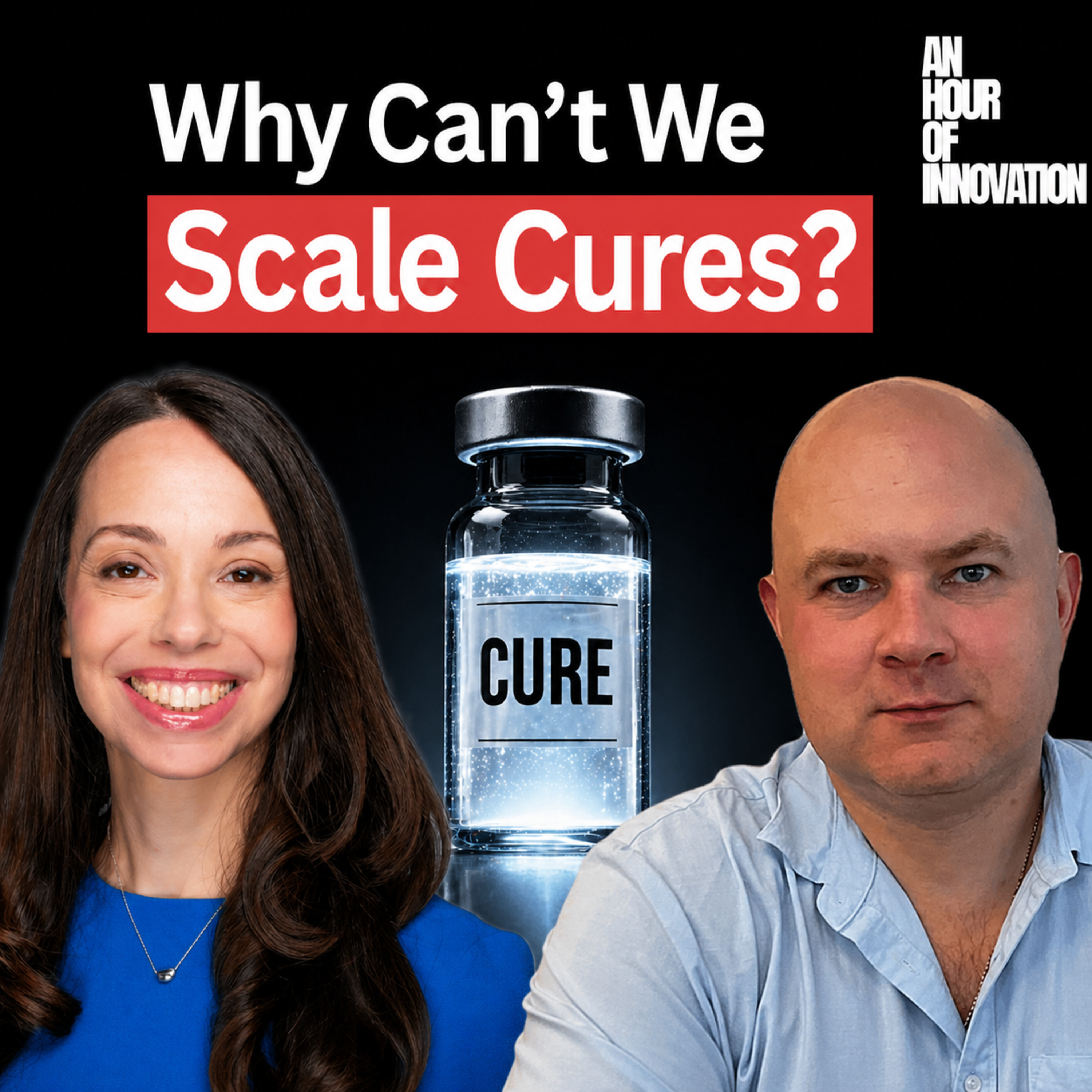
In this episode of An Hour of Innovation podcast, Vit Lyoshin speaks with Tara Austraat-Churik, partner at Blue Matter, and a biotech and pharma expert working at the intersection of AI, drug discovery, and clinical development.
Vit and Tara explore how AI is transforming the entire pharmaceutical lifecycle, from early-stage research and molecular design to clinical trials and regulatory processes. Tara explains where AI is already delivering real impact, and where the biggest bottlenecks still exist, especially around fragmented data, scalability, and operational complexity.
A key theme of the conversation is the paradox of modern healthcare: we already have technologies capable of curing diseases in a single treatment, yet these breakthroughs remain difficult to scale and access. Tara breaks down the challenges behind cell and gene therapies, including manufacturing constraints, high costs, and the limitations of current healthcare and reimbursement systems.
The discussion also dives into emerging innovations such as CRISPR, CAR-T therapies, digital twins, and personalized medicine. Tara shares how these technologies are reshaping the future of treatment by moving away from one-size-fits-all approaches toward more targeted and effective solutions.
Throughout the episode, Tara provides a practical, insider perspective on what it actually takes to bring new therapies to market, and why many promising innovations fail to reach patients. The conversation offers a clear and grounded view of where biotech and pharma are today, and what needs to change to make the next generation of breakthroughs accessible at scale.
Tara Austraat-Churik works at the intersection of biotech, pharma, and AI, helping companies turn scientific breakthroughs into real-world treatments. She focuses on drug discovery, clinical development, and the operational challenges of bringing therapies to patients. Tara has firsthand experience with how decisions are made across the pharma value chain, from early research to market access. She brings a practical perspective on what works, what fails at scale, and why promising innovations often struggle to reach the people who need them most. Her insights help bridge the gap between cutting-edge science and real-world healthcare impact.
Topics Discussed
- How AI is transforming drug discovery and pharma innovation
- Why biotech breakthroughs struggle to scale
- The true bottleneck: data silos limiting AI in pharma
- Why $3M cures exist but remain inaccessible to most
- How CRISPR and gene therapy are changing medicine
- The reality behind personalized medicine and patient treatment
- Digital twins and the future of clinical trials in healthcare
- Manufacturing challenges in scaling cell and gene therapies
- Why healthcare economics slow down life-saving innovation
- Future trends in AI, biotech, and pharma development
Timestamps
00:00 Introduction
02:23 How AI Helps in Biotech
05:08 Breakthroughs in Biotech and Pharma
08:12 AI's Role in Drug Discovery
09:27 Challenges in Implementing AI Solutions
13:24 Understanding Cell and Gene Therapy
16:58 Current Breakthroughs in Gene Therapy
18:30 Scaling Challenges in Cell and Gene Therapies
25:28 AI's Impact on Genomics and Gene Therapy
27:01 CRISPR: Revolutionizing Research and Treatment
28:37 AI-Enhanced Labs: The Future of Discovery
29:57 Opportunities for AI in Clinical Trials
31:04 Opportunities for AI in Digital Twins
31:41 Opportunities for AI in Decentralized Trials
32:51 Opportunities for AI in Medical Writing
34:03 How Digital Twin in Medicine Will Work
35:07 The Evolution of Personalized Medicine
40:34 Tara's Exciting Biotech and Pharma Developments
44:59 Innovation Q&A
Connect with Tara
- Website: https://bluematterconsulting.com/
- LinkedIn: https://www.linkedin.com/in/tchurik/
Support the Podcast
If you enjoy the podcast, you can support it by exploring the tools below.
These are affiliate links, meaning the show earns a small commission at no extra cost to you.
- Google Workspace: Collaborative way of working in the cloud, from anywhere, on any device.
- Kit: Email marketing that automates your growth.
- Webflow: Create custom, responsive websites without coding.
- Amplemarket: Step into the future of sales: Human + AI. Empower reps, uncover opportunities, and grow revenue.
For inquiries about sponsoring An Hour of Innovation, email iris@anhourofinnovation.com
Connect with Vit
- Substack: https://anhourofinnovation.substack.com/
- LinkedIn: https://www.linkedin.com/in/vit-lyoshin/
- X: https://x.com/vitlyoshin
Episode References
U.S. Food and Drug Administration (FDA)
https://www.fda.gov
The FDA is the U.S. regulatory agency responsible for approving drugs and overseeing clinical trials; it has begun using generative AI internally to speed up scientific review.
Retrieval-Augmented Generation (RAG)
https://en.wikipedia.org/wiki/Retrieval-augmented_generation
A generative AI technique that combines large language models with company-specific data to produce more accurate and relevant outputs.
CRISPR Gene Editing Technology
https://en.wikipedia.org/wiki/CRISPR
A breakthrough gene-editing tool that allows scientists to modify DNA directly, enabling potential cures for genetic diseases.
Children’s Hospital of Philadelphia (CHOP)
https://www.chop.edu
A leading pediatric hospital involved in a recent breakthrough where a baby was treated using advanced gene-editing techniques.
CAR-T Cell Therapy
https://www.cancer.gov/about-cancer/treatment/research/car-t-cells
A type of immunotherapy that engineers a patient’s own immune cells to target and destroy cancer cells.
Salesforce
https://www.salesforce.com
A widely used enterprise software platform referenced as an example of scalable, flexible systems that can serve multiple users and organizations.
Digital Twins (Healthcare / Pharma)
https://pmc.ncbi.nlm.nih.gov/articles/PMC12671388/
Virtual models of patients or populations used to simulate disease progression and test treatments in a digital environment.


